A
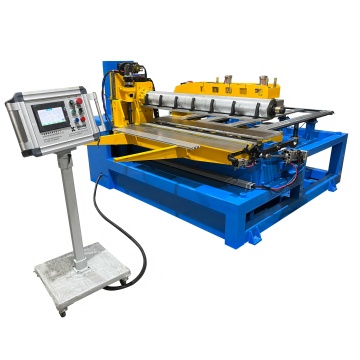
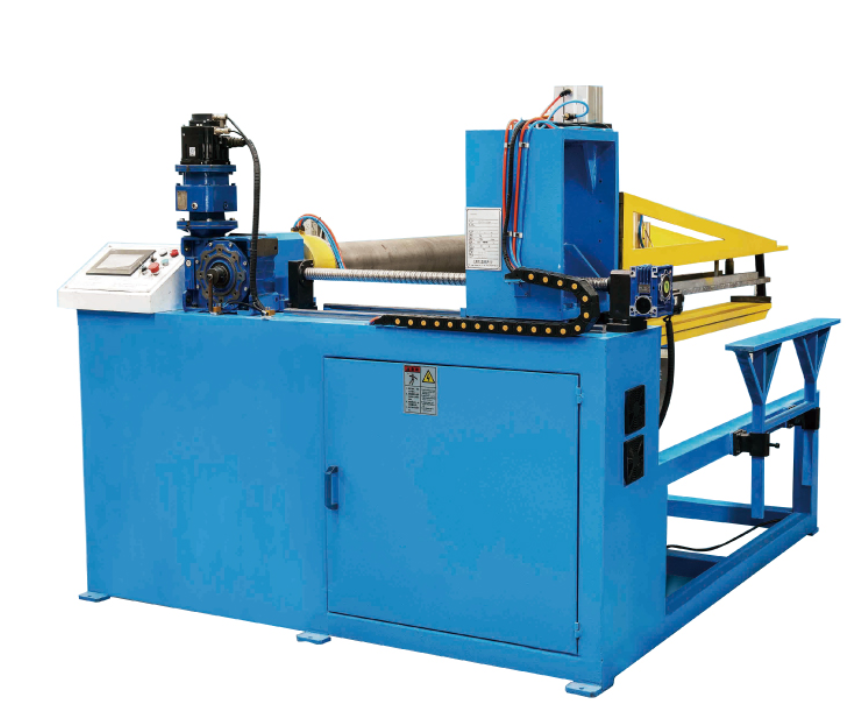
Coil Bender is a specialized machine designed to bend metal pipes/tubes into continuous coiled shapes (e.g., spiral, helical, or circular coils) with uniform diameter and pitch. Unlike standard benders that create single-angle bends, it focuses on multi-turn coiling—critical for applications requiring compact, space-saving pipe layouts. It is widely used in HVAC, refrigeration, automotive, and renewable energy industries.
Core Working Principle & Key Types
The machine operates through a 4-step automated/semi-automated process, with variations based on
power and coiling method:
Feeding: Pipes/tubes (diameter: 3mm–50mm, length: 1m–20m) are fed into the machine via a motorized roller system, ensuring steady, consistent material flow.
Guiding: A adjustable guide rail aligns the pipe with the coiling mechanism, preventing lateral shifting during bending.
Coiling Execution: The core mechanism shapes the pipe into coils, with two common types:
Mandrel Coil Benders: Use a fixed mandrel (metal rod) as a guide— the pipe is wrapped around it to form coils (ideal for rigid metals like steel, ensuring no pipe collapse).
Mandrel-Free Coil Benders: Rely on precise roller pressure to curve flexible pipes (e.g., aluminum, copper) into coils, suitable for thin-walled materials to avoid mandrel-induced scratches.
Cutting & Finishing (Optional): After reaching the required number of coils (programmable via a digital panel), a built-in cutter trims the pipe; some models add deburring to smooth coil ends.
Key Advantages
Coil Uniformity: Ensures consistent coil diameter (±0.5mm tolerance) and pitch (distance between coils), critical for heat exchange efficiency (e.g., HVAC coils) or fluid flow stability.
Space Efficiency: Converts straight pipes into compact coils, reducing storage/installation space by 60–80% (e.g., coiled refrigeration tubes in small appliances).
Efficiency: Processes 5–15 coils/hour (depending on size), 4–7x faster than manual coiling, ideal for batch production (e.g., 100+ coiled tubes for HVAC units).
Programmability: Digital control panels let users set coil diameter (10mm–1m), number of turns (1–100), and feeding speed, enabling quick job switching.
Typical Applications
HVAC & Refrigeration: Bending copper/aluminum tubes into heat exchanger coils (e.g., AC evaporator coils), maximizing surface area for heat transfer.
Automotive: Creating coiled steel tubes for engine oil coolers or fuel lines, fitting into tight under-hood spaces while ensuring fluid circulation.
Operational & Maintenance Tips
Mandrel Care (for Mandrel Models): Clean the mandrel after use to remove metal shavings; replace worn mandrels to avoid uneven coils.
Pressure Adjustment: Match roller pressure to material—too much pressure deforms thin pipes; too little causes loose coils.
Maintenance: Lubricate feeding rollers weekly; check cutter sharpness daily (dull cutters cause pipe burrs); calibrate coil diameter settings monthly for precision.
In summary, the coil bender transforms straight pipes into functional, space-saving coils, ensuring performance and efficiency in industries where coiled pipe systems are essential—making it a key tool for modern manufacturing and infrastructure projects.