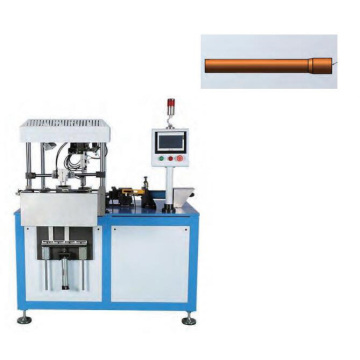
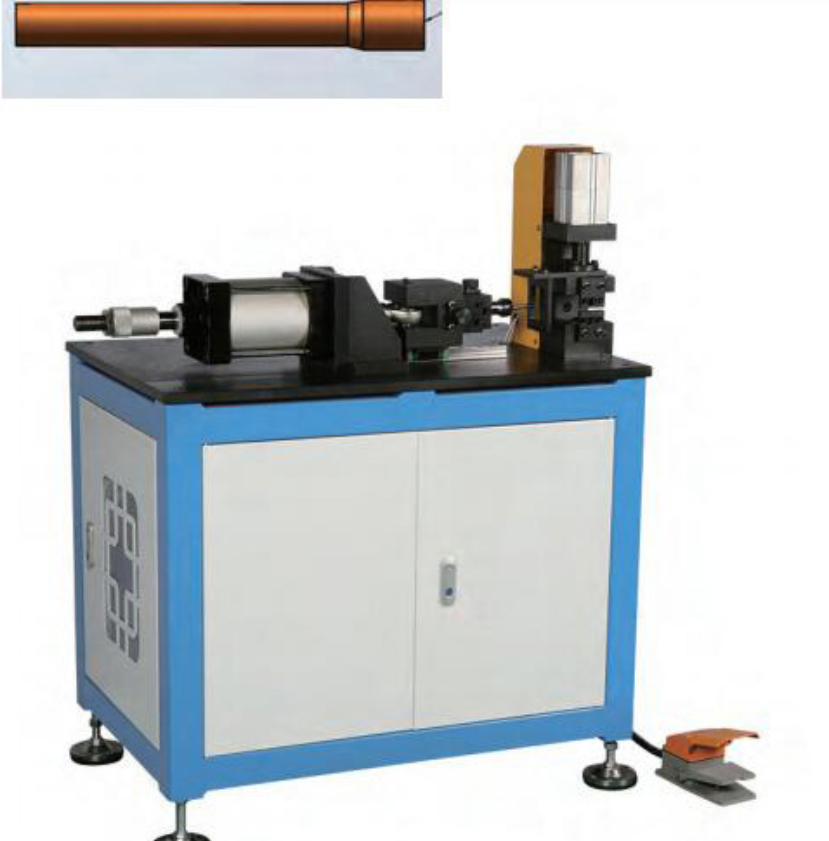
Pipe flaring machines are essential equipment for forming flared ends on metal pipes, widely used in plumbing, HVAC, and automotive industries. They reshape pipe ends (copper, aluminum) via "mechanical pressing + plastic deformation"—using a conical or cylindrical mandrel to expand pipe ends into flared shapes (e.g., 45°/90° angles, bell mouths) that enable leak-tight connections with fittings.
Common types include manual pipe flarers and automatic hydraulic flarers. Manual models, with hand-cranked mandrels, suit small-batch thin-walled pipes (0.3-1mm), ideal for on-site repairs. Automatic hydraulic ones use 5-20MPa pressure to drive mandrels, designed for thick-walled pipes (1-5mm). They ensure uniform flaring (tolerance ≤0.05mm) and fast speeds (15-30 pipes/min).
Key applications: 1) Plumbing: Flares copper pipe ends to connect with compression fittings, preventing water leakage in household water supply systems. 2) HVAC: Forms bell-mouthed flares on aluminum AC pipes, ensuring tight seals for refrigerant circulation (critical for avoiding cooling/heating loss).
Advantages: High precision (flare angle error <0.5°) ensures fitting compatibility; no material loss (unlike cutting); and adaptability to various pipe diameters (6-50mm). Automated models integrate feeding and clamping systems, handling 600+ pipes/hour for mass production. Future trends focus on smart features (digital angle monitoring) and lightweight designs, catering to both factory mass production and on-site maintenance needs.