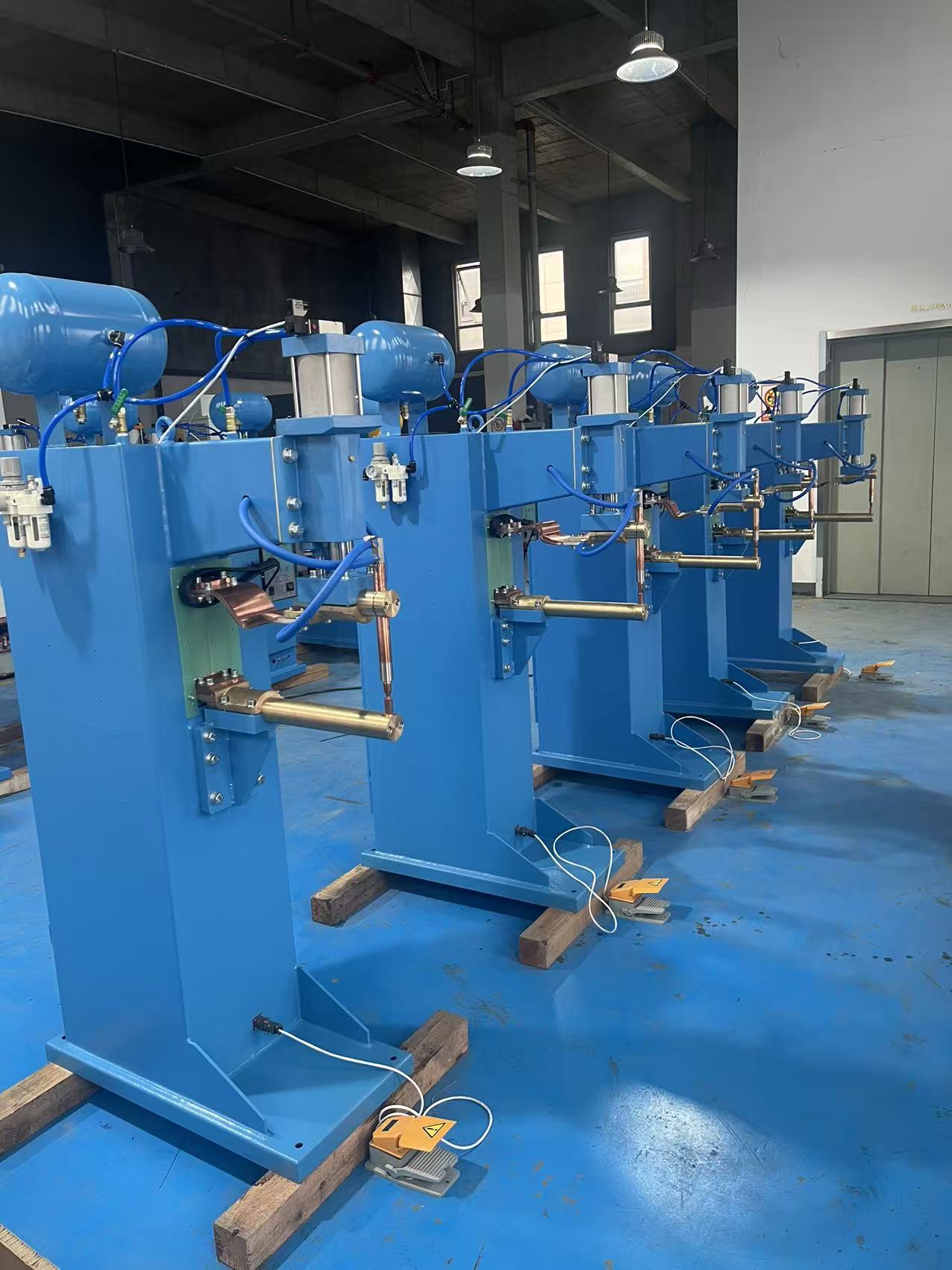
Spot Welding Machine, also known as resistance spot welding (RSW) machine, is a core equipment in modern metal joining industry, widely used for connecting thin-gauge sheet metals through the principle of resistance heating. It is a efficient, clean and cost-effective welding solution, playing an indispensable role in mass production and precision manufacturing fields.
The core working principle of spot welding machines is to clamp two or more overlapping metal workpieces between two copper alloy electrodes, apply a certain pressure, and pass a large current through the contact points. The electrical resistance at the workpiece interface generates concentrated heat in a short time (usually milliseconds), melting the local metal to form a weld nugget, which solidifies under continuous pressure to form a firm joint, without the need for filler materials or shielding gas.
Common types include AC spot welding machines (simple and robust, suitable for basic applications) and medium frequency direct current (MFDC) spot welding machines (energy-saving, high-precision, ideal for automated and high-demand scenarios). Key components include transformers, electrodes, controllers, and cooling systems, ensuring stable current output, precise pressure control, and long-term equipment operation.
Widely applied in automotive, electronics, home appliances, sheet metal fabrication and other industries, it is used for welding car bodies, battery tabs, refrigerator casings, metal enclosures and more. Its advantages lie in fast welding speed, high joint strength, low energy consumption, and easy integration into automated production lines, while being suitable for most conductive metals such as steel, aluminum alloys and copper alloys. As a versatile welding equipment, it balances efficiency and quality, meeting the diverse needs of modern manufacturing.