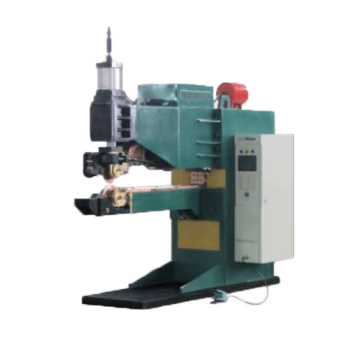
Resistance Welding Machine: An Overview
A resistance welding machine is a device that joins metals by applying pressure and electric current, utilizing the resistance heat generated at the weld interface. This process is efficient, cost-effective, and widely used in manufacturing.
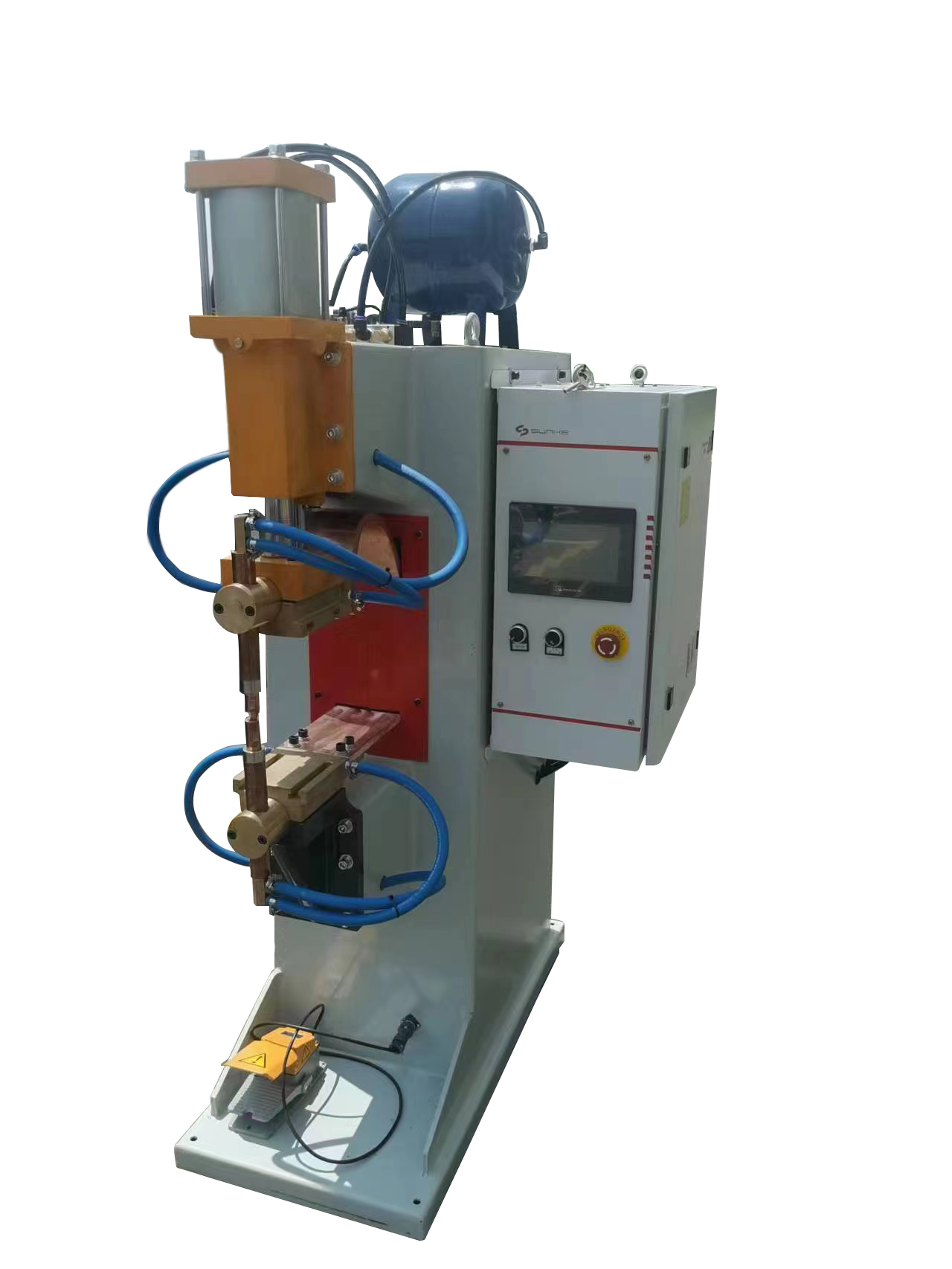
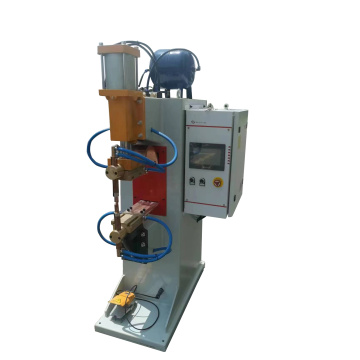
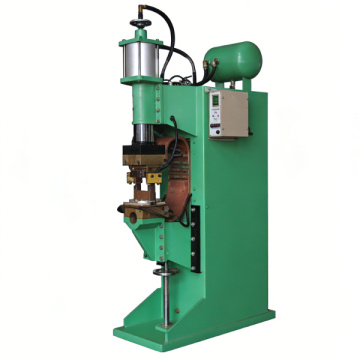
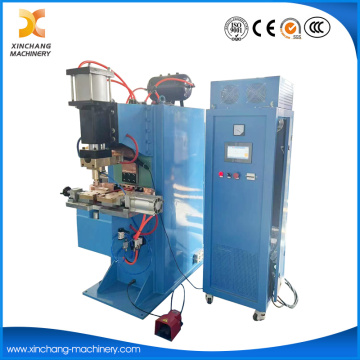
The machine consists of key components: a power supply that delivers high current, electrodes that conduct electricity and apply pressure, a frame for stability, and controls to regulate parameters like current, time, and force. Operation involves clamping workpieces between electrodes, passing current through them—resistance at contact points creates intense heat (up to 1800°C), melting the metal. Pressure ensures a strong bond as the metal cools and solidifies.
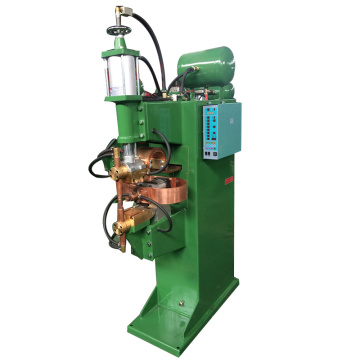
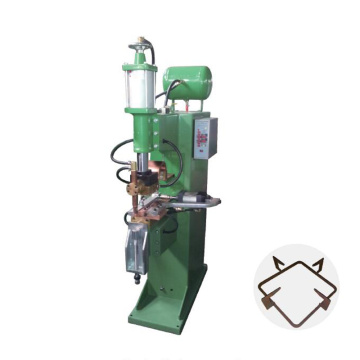
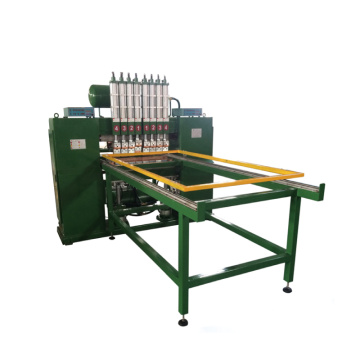
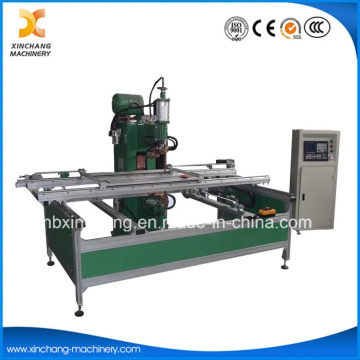
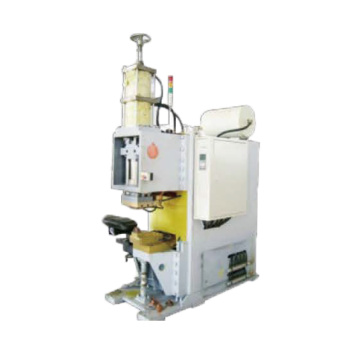
Common types include spot welding (for sheet metal joints in automotive and appliances), seam welding (creating continuous welds in pipes/tanks), projection welding (using pre-formed projections for precision), and butt welding (joining ends of rods/tubes).
Advantages include fast cycle times, no need for filler materials or fluxes, and minimal distortion. It’s ideal for high-volume production due to automation compatibility. Limitations include suitability primarily for conductive metals (steel, aluminum) and challenges with thick materials requiring higher power.
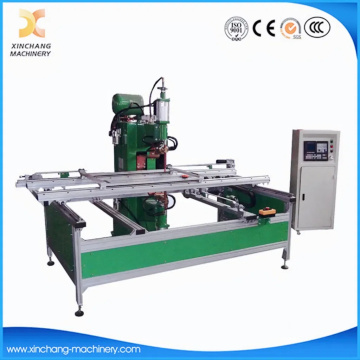
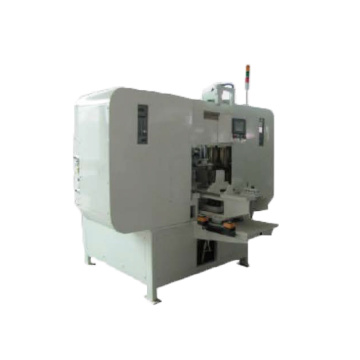
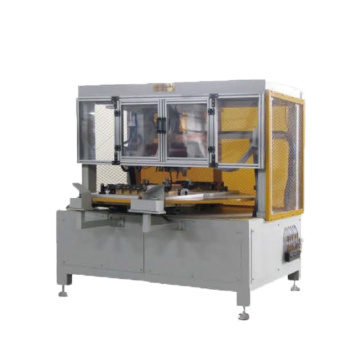
Resistance welding machines vary in size—from small bench-top units for repairs to large robotic systems in automotive assembly lines. They play a critical role in industries like automotive, aerospace, electronics, and construction, ensuring durable, consistent metal joints.